· Art · Chapter 7
Chapter 7: Rebirth in the Afterlife
Key art for the final chapter — back to the bridge where it all began, at dawn, in colour for the first time. With this, every chapter has its key art.
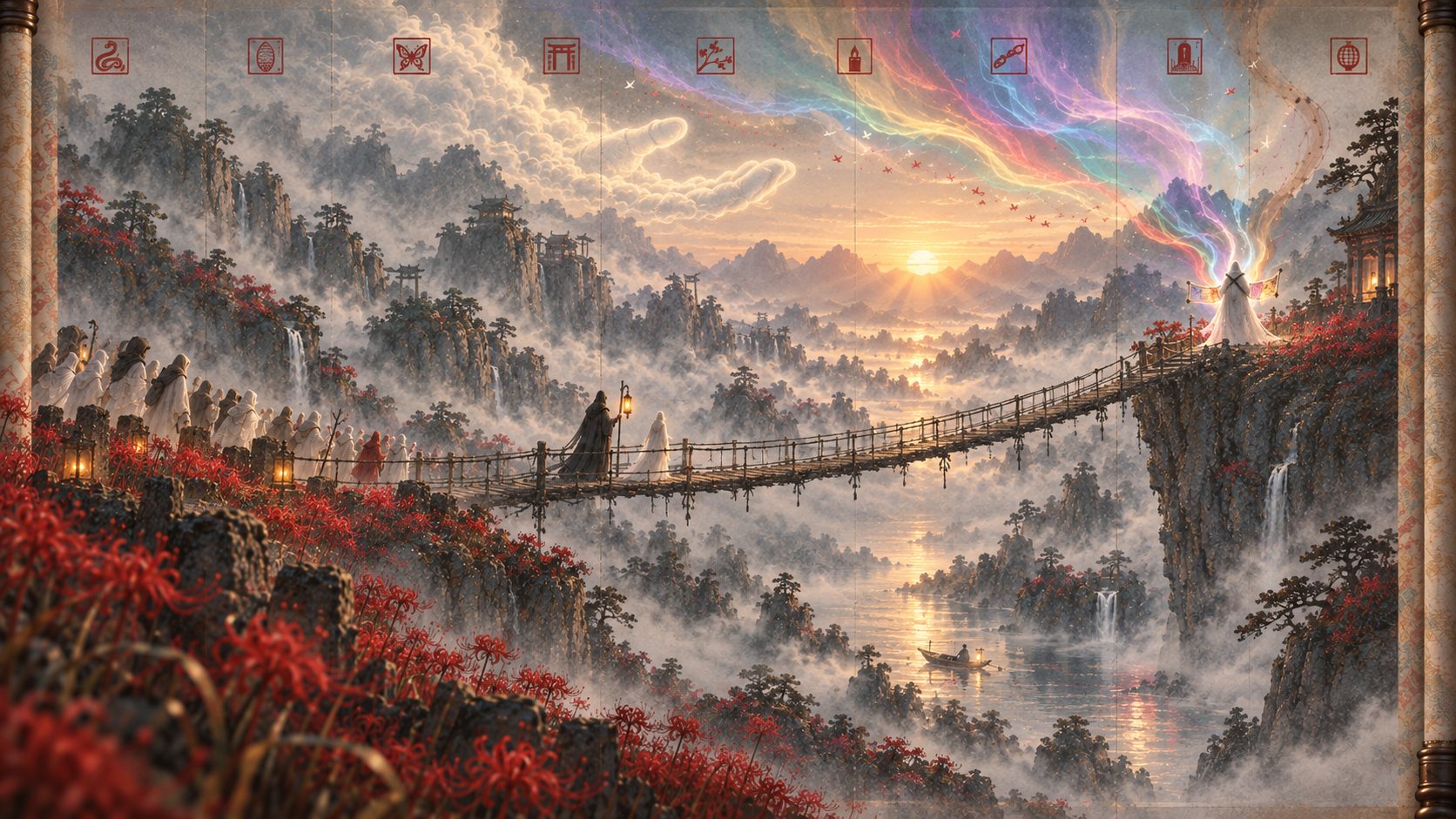
Chapter 7, Rebirth in the Afterlife (复往生), is where the journey ends: back at the bridge from Chapter 1.
The idea
You’ve walked a whole life that wasn’t yours. Now you’re on the far side of the bridge, holding the scroll you’ve carried since the beginning. What’s written on it, and how much of it you managed to fill, decides what happens next.
The game has three endings. This image is one of them.
Reading the image
- Colour, at last. Every chapter so far has been painted in a single ink tone. This is the first time the world is in full colour: the nine threads of light that scattered on this bridge in Chapter 1 are flowing back into the scroll.
- The lilies that shattered like glass in Chapter 1 are in full bloom.
- The bridge holds the lantern-bearer, a figure in white, and behind them a long line of travellers waiting to cross. Look for faces you might recognise from earlier chapters, like the child in red.
- The hand of mist that followed you through every chapter is opening up and dissolving into the clouds.
- The frame is the Life Scroll itself: its rollers at the edges, its stitched panels across the sky, and a row of seals collected along the way. Each seal is a story from an earlier chapter.
With this, every chapter of Dear Z. has its key art, from the mist of the first bridge to the colour of the last. The next step is turning these pictures into places you can walk through.